Food Insecurity in Afghanistan: A Systems-Thinking Approach to Zero Hunger
Authors:
Bhooshan Pandya, Pia Nelson, and Jorge Molina
Abstract
Food insecurity remains a critical challenge in Afghanistan, where more than 15 million people—approximately 35–40% of the population—faced acute levels of hunger at the time of this study (2020–2021). This article presents a systems-thinking analysis of the interconnected drivers of food insecurity under the United Nations Sustainable Development Goal (SDG) 2: Zero Hunger. Using visual mapping techniques—including a Systems Map, Empathy Map, and Fishbone Diagram—combined with primary data from semi-structured interviews with three Afghan residents, the study identifies root causes spanning climate variability, inadequate infrastructure, governance failures, and ongoing conflict. The results highlight feedback loops between these factors and the emotional, social, and practical dimensions of daily life under food scarcity. Particular attention is given to gendered dimensions of food insecurity and to the psychological toll of prolonged conflict and economic collapse. Systems-thinking tools proved valuable for revealing interconnections that single-issue analyses might overlook. The study recommends integrated, multi-level interventions targeting infrastructure development, anti-corruption measures, climate adaptation, mental health support, and gender-transformative approaches. A comparative analysis with 2026 data indicates significant deterioration in the food security situation, underscoring the urgency of structural reforms. Evidence of successful pilot interventions provides templates for scaling. Future research should incorporate larger, more representative samples and longitudinal data to track evolving conditions.
Keywords: food insecurity, Afghanistan, systems thinking, Zero Hunger, SDG 2, visual mapping, semi-structured interviews, gender inequality, mental health, humanitarian crisis
1. Introduction
The United Nations Sustainable Development Goal (SDG) 2, Zero Hunger, aims to end hunger, achieve food security and improved nutrition, and promote sustainable agriculture by 2030.1 Despite global progress in some regions, Afghanistan continues to experience severe food insecurity, driven by a complex interplay of conflict, climate variability, inadequate infrastructure, governance challenges, and socioeconomic factors. Gender inequality compounds these vulnerabilities, with women and girls facing disproportionate barriers to food security and livelihood opportunities.
This article presents a systems-thinking analysis conducted by a team of three researchers—Bhooshan Pandya, Pia Nelson, and Jorge Molina—as part of the online course "Design for Impact." The project spanned eleven weeks, from 4 December 2020 to 12 February 2021, followed by a 9-week reboot phase from 26 March 2021 to 18 June 2021 to reassess the project methodology and gain further insights. The study employs visual mapping techniques and primary data from semi-structured interviews with Afghan residents. The approach recognises that food insecurity is not caused by any single factor but emerges from a network of interacting forces. This systems perspective is particularly relevant given that Afghanistan's crisis has continued to deepen since 2021, as demonstrated by comparative 2026 data presented in this revised analysis.
2. Background and Context
2.1 Historical Context (2020–2021 Period)
Afghanistan has long faced acute food insecurity, exacerbated by decades of conflict, political instability, and environmental stressors. At the time of this study (2020–2021), approximately 15 million people (35–40% of the population) faced crisis or emergency levels of food insecurity (World Food Programme, 2021). The country experienced recurrent droughts, floods, and earthquakes, which significantly reduced agricultural output and household purchasing power. Limited storage and transportation infrastructure increased post-harvest losses and restricted farmers' ability to sell surplus produce at fair prices.
The situation was further compounded by governance challenges, including corruption (Transparency International, 2021; Afghanistan ranked 173rd out of 180 countries on the Corruption Perceptions Index) and ineffective social protection mechanisms. Agriculture remained the primary livelihood for the majority of the rural population (approximately 78%), yet agricultural inputs, irrigation systems, and market access were severely constrained (FAO, 2020).
Gender inequality was and remains a structural feature of Afghanistan's food insecurity crisis. Women face severe restrictions on land ownership, market participation, and agricultural decision-making. In rural areas, women's agricultural work is typically confined to unpaid household tasks such as livestock care, water collection, and food preparation, while men control decisions about crop selection and marketing (USAID, 2019).
2.2 Updated Context: The Food Crisis in 2026
Since the original exercise was conducted in 2020–2021, the food security situation in Afghanistan has deteriorated significantly, validating the feedback loops and systemic vulnerabilities identified in this study.
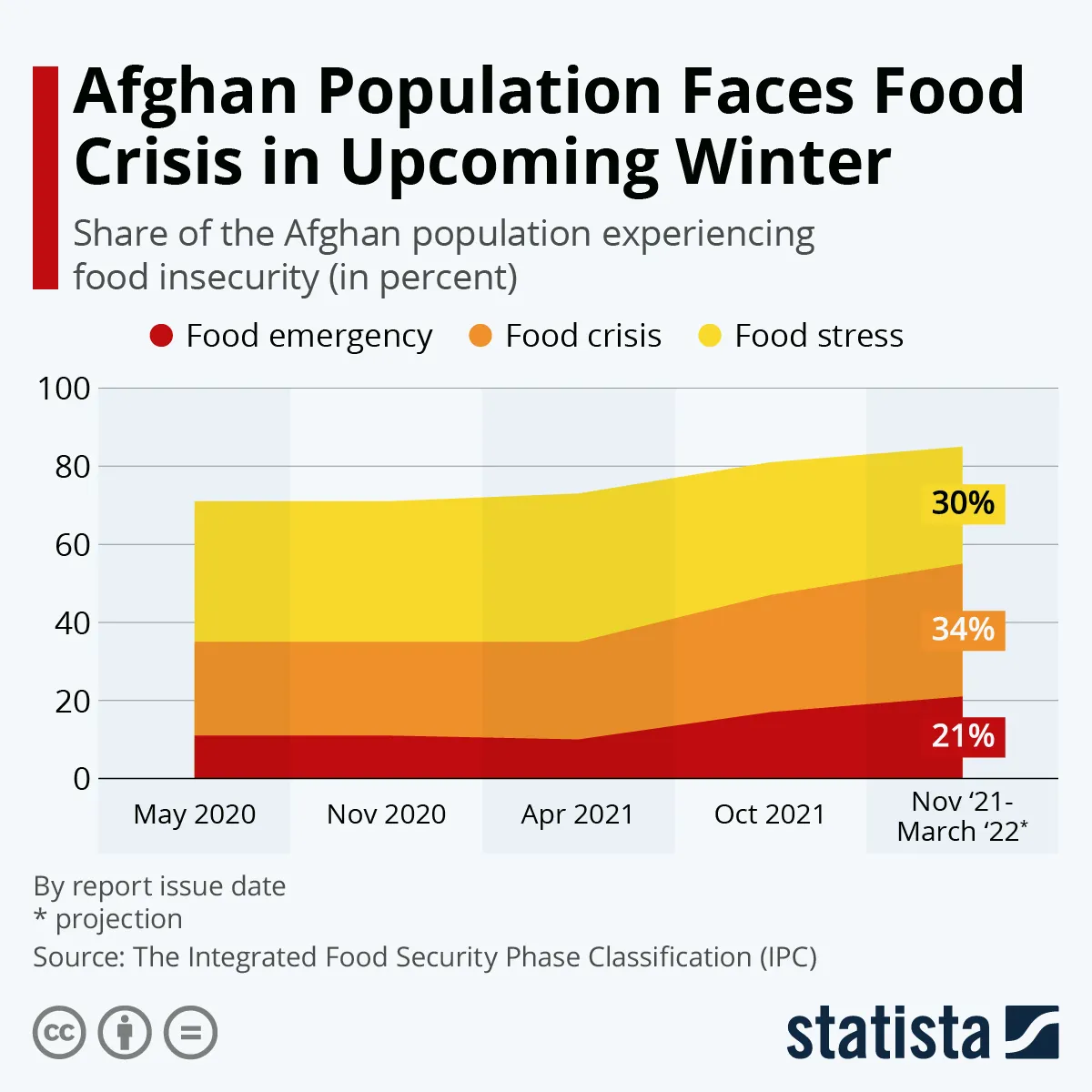
Figure 1: Escalation of food insecurity in Afghanistan from May 2020 to November 2021–March 2022. The stacked area chart shows the share of the Afghan population experiencing food emergency (red), food crisis (orange), and food stress (yellow). By the November 2021–March 2022 period, 21% faced food emergency, 34% faced food crisis, and 30% faced food stress, totalling 85% of the population experiencing some level of food insecurity. This dramatic escalation, particularly following August 2021 political changes, validates the systemic vulnerabilities identified in this systems-thinking analysis. Data source: Integrated Food Security Phase Classification (IPC).
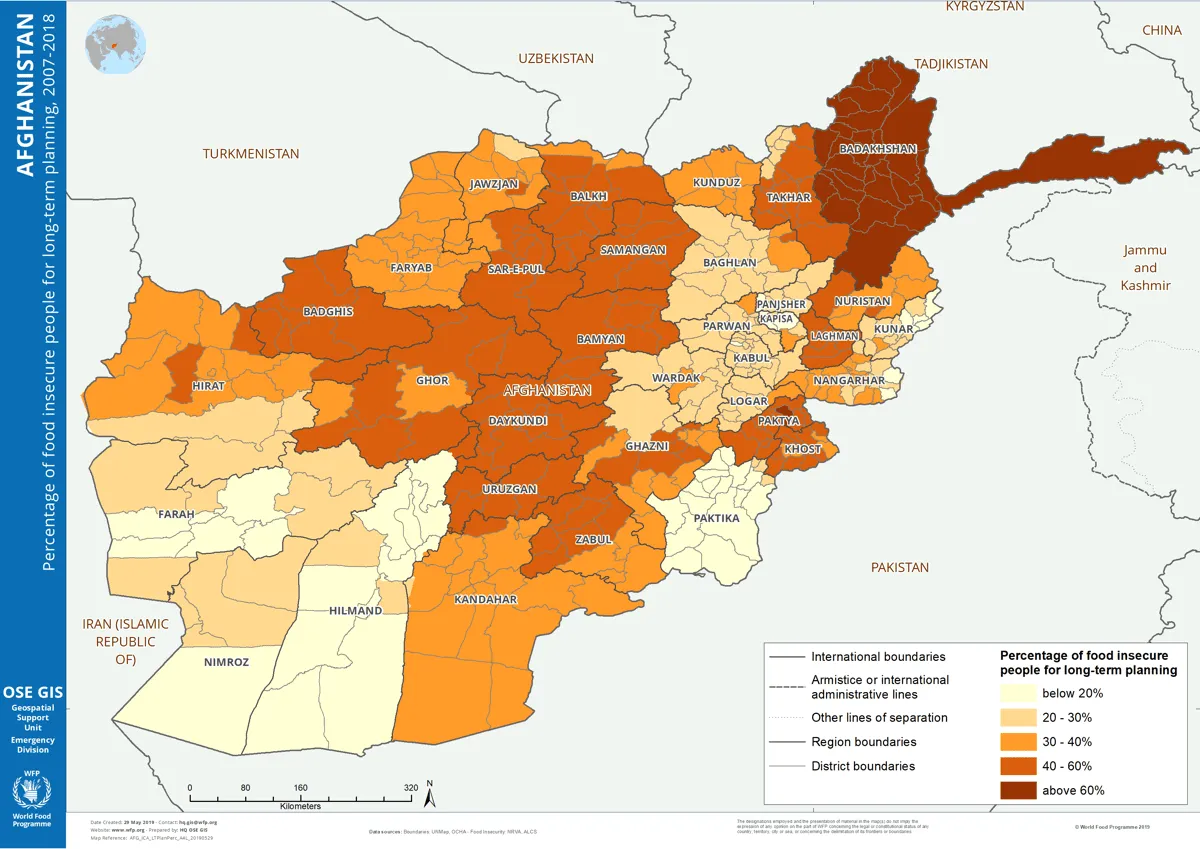
Figure 2: Percentage of food insecure people by province for long-term planning purposes. Darker orange provinces (above 60%) include Badakhshan, Takhar, Balkh, and central regions, indicating areas of highest severity requiring urgent and sustained intervention. Lighter areas (20–30%) show relatively lower but still substantial food insecurity. The spatial variation demonstrates why geographically differentiated, region-specific approaches are essential, as discussed in the recommendations section. Source: World Food Programme (WFP) Geospatial Support and Emergency Division (OSE GIS).
Post-2021 Developments
Following the political changes of August 2021, Afghanistan experienced an unprecedented economic collapse. The freezing of central bank assets (approximately USD 7 billion), the suspension of development aid, and restrictions on international financial transactions triggered currency devaluation and hyperinflation. Banking system paralysis severely limited importation of essential goods, including food and agricultural inputs (World Bank, 2022).
Simultaneously, recurrent droughts persisted. The 2021–2023 period saw reduced rainfall across major agricultural zones, compounded by the 2022–2023 La Niña-induced dry spell that further depressed wheat production in key provinces by 20–25% (FAO, 2023). Humanitarian access was increasingly restricted, and the introduction of policies limiting women's participation in aid delivery and the broader workforce further constrained livelihoods and economic activity (Human Rights Watch, 2022).
2026 Current Situation
According to the Integrated Food Security Phase Classification (IPC) analysis (Global Network Against Food Crises & IPC, 2026), approximately 18.2 million people (≈45% of the population) face crisis or worse levels of food insecurity (IPC Phase 3 or above), with 4.7 million experiencing emergency conditions (IPC Phase 4). Wheat production remains suppressed due to water scarcity, lack of agricultural inputs (seeds, fertilisers, fuel), and persistent insecurity in rural areas (FAO, 2026). International aid has partially resumed but remains substantially below pre-2021 levels (WFP, 2026) and is heavily conditioned on governance and human rights criteria.
Comparative Summary: 2020–2021 vs. 2026
| Factor | 2020–2021 | 2026 |
|---|---|---|
| Population in food crisis/emergency | ~15 million (35–40%) | ~18.2 million (≈45%) |
| Wheat production trend | Declining; variable by region | 20–25% below normal in key provinces |
| International aid status | Restricted but functional | Significantly reduced; heavily conditioned |
| Infrastructure state | Poor but partially functional | Further deterioration; maintenance backlog |
| Governance/Corruption ranking | 173rd/180 (CPI) | Similar or slightly worse |
| Currency stability | Under pressure | Severely compromised; inflation 40%+ |
| Agricultural input availability | Limited | Critically scarce |
| Humanitarian access | Restricted but possible | Further restricted; gender-based limitations |
| Women's workforce participation | Low but present | Further restricted by Taliban policies |
This escalation underscores the urgency of the systemic interventions recommended in this study and validates the feedback loops identified in the visual mapping exercise.
3. Methodology
The research process followed a structured, iterative approach typical of design-thinking and systems-thinking inquiries:
- Brainstorming of assumptions regarding the causes of hunger.
- Development of a Systems Map to visualise interconnections among actors and factors contributing to food insecurity.
- Creation of an Empathy Map to capture the lived experiences of individuals within the system.
- Application of a Fishbone (Ishikawa) Diagram to categorise recurring themes.
- Application of the Fogg Behaviour Model to understand motivations and attitudes of affected populations.
- Formulation of "How Might We" questions to guide problem framing (detailed in Section 4.4).
- Concurrent secondary research on environmental, agricultural, and socioeconomic conditions.
- Collection of primary data through semi-structured interviews with three Afghan residents.
Recruitment was conducted via Reddit and Facebook; interviews were scheduled to account for the 9.5-hour time difference between the researchers' location and Afghanistan. All interviews were conducted online via Zoom's audio feature and recorded for later analysis and synthesis. Interviews were scheduled at 23:00–23:59 ET to accommodate participants' daytime availability in Afghanistan.
4. Visual Mapping, Secondary Research, and Research Questions
4.1 Systems Map and Empathy Map
The Systems Map revealed multiple feedback loops linking climate conditions, infrastructure deficits, corruption, and ongoing conflict. For example, poor infrastructure increases transport costs, which in turn reduces farmers' incentives to produce surplus, thereby further limiting food availability and market participation. Similarly, governance failures and corruption create distrust in institutions, reducing farmers' willingness to invest in productivity improvements.
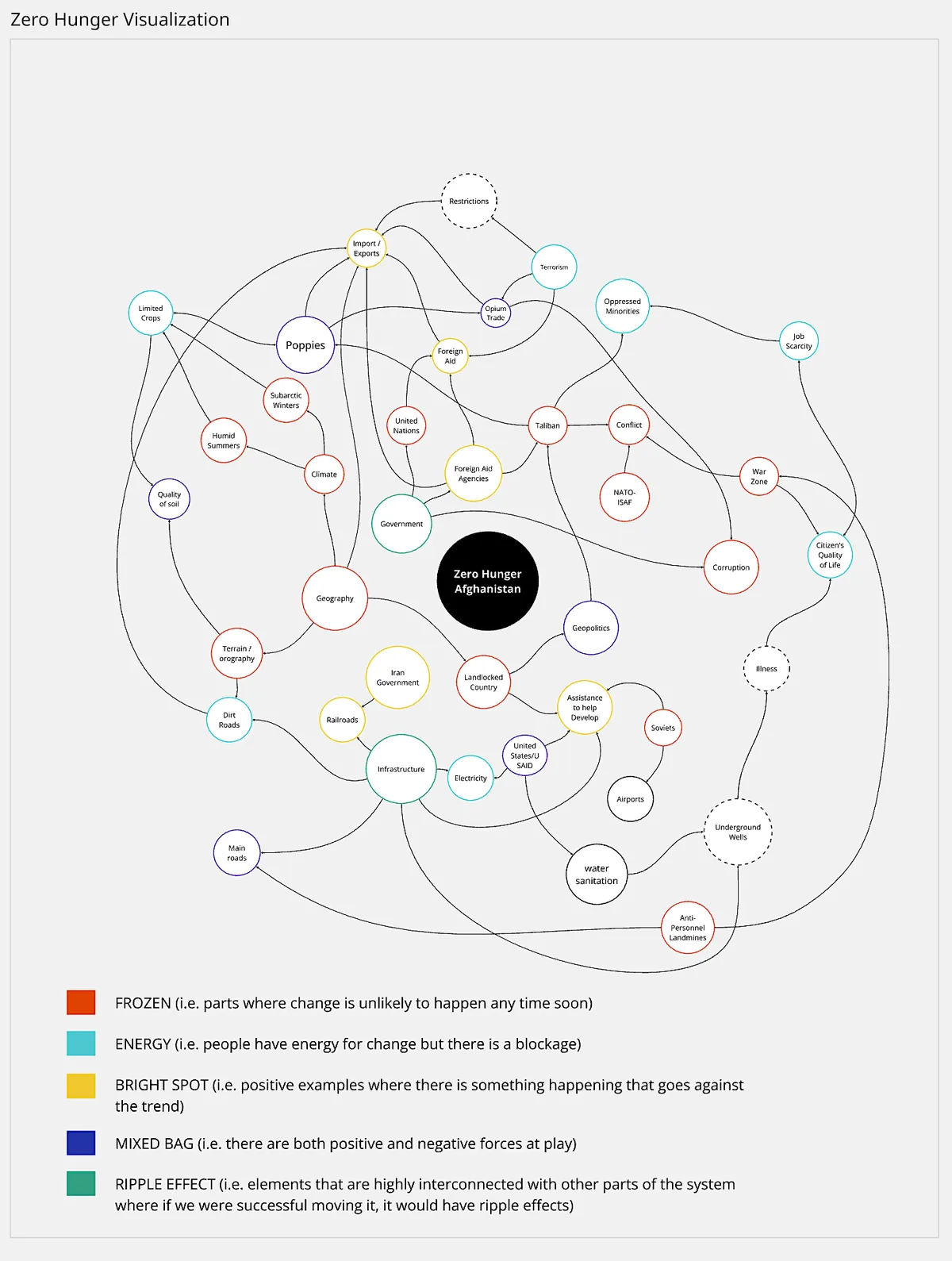
Figure 3: Zero Hunger Visualization (Systems Map) showing the complex interconnections of factors driving food insecurity in Afghanistan. The central node "Zero Hunger Afghanistan" is surrounded by 40+ actors and factors organised by system dynamics: (1) FROZEN elements (red)—structural constraints unlikely to change soon (geography, terrain, landlocked status); (2) ENERGY elements (teal)—actors with potential for change but facing blockages (government, infrastructure, geopolitics); (3) BRIGHT SPOTS (yellow)—positive examples and interventions (foreign aid, assistance to help development); (4) MIXED BAG (blue)—factors with both positive and negative forces; (5) RIPPLE EFFECT (green)—highly interconnected elements where successful intervention on one would cascade across the system (infrastructure, conflict, poppy production). The map demonstrates why systems-thinking approaches are essential for addressing food insecurity, as single-sector interventions cannot account for the dense web of feedback loops and interdependencies.
The Empathy Map highlighted emotional and practical dimensions of daily life under food scarcity, including fear, shame, social exclusion, and reliance on community networks and informal support mechanisms. These emotional dimensions are critical for understanding why economic interventions alone prove insufficient without parallel psychosocial support.
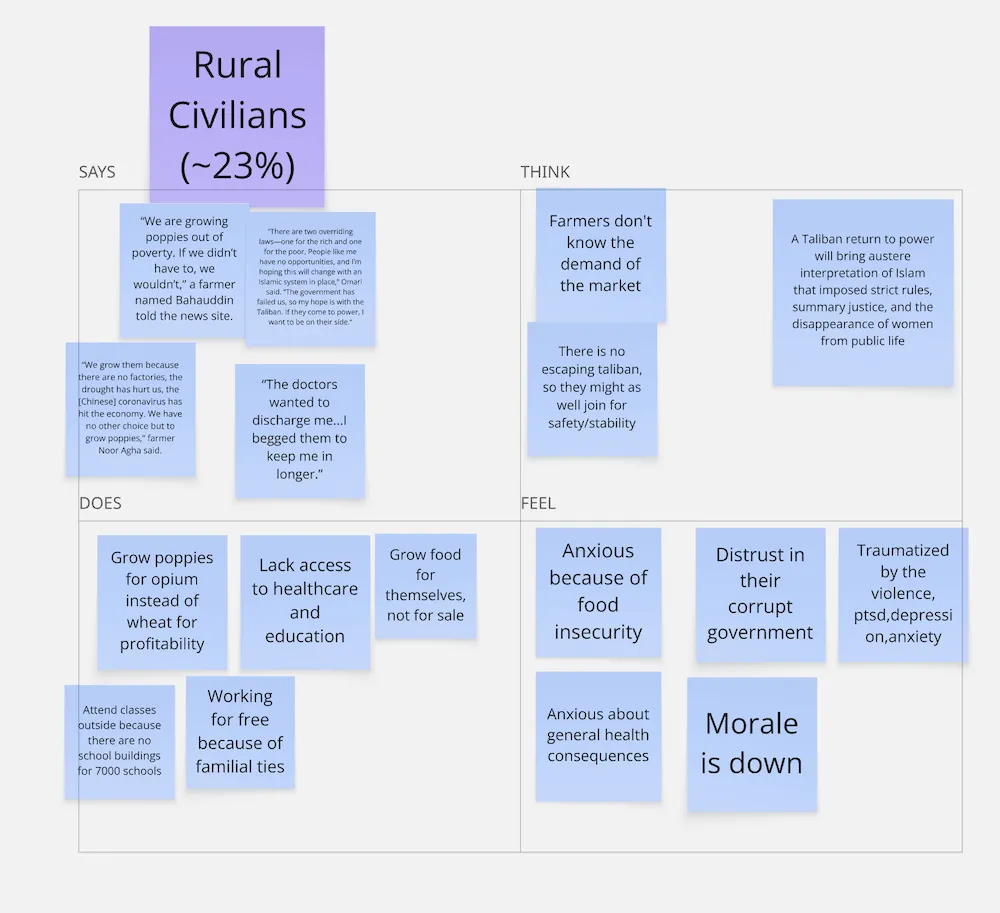
Figure 4: Empathy Map capturing the lived experiences of rural civilians (~23% of Afghanistan's population) experiencing food insecurity. The map organises insights into four dimensions: (1) SAYS—direct quotes from residents about economic desperation, limited opportunities, and survival strategies; (2) THINKS—perceptions of market demand, Taliban governance, and future stability; (3) DOES—coping mechanisms including poppy cultivation for profitability, limited access to healthcare and education, and unpaid labour; (4) FEELS—emotions including anxiety about food insecurity, distrust in government, and trauma from violence. The map reveals the interconnection between material deprivation and psychological vulnerability, validating the need for integrated psychosocial support alongside economic interventions.
4.2 Secondary Research Sources and Data Integration
To complement the primary data collection, the team simultaneously reviewed secondary sources on Afghanistan's environmental conditions, irrigation systems, crop cultivation practices, weather-related impacts, and agricultural infrastructure. The analysis drew upon authoritative reports, including publications from the United States Department of Agriculture's Foreign Agricultural Service (USDA FAS, 2015) and the World Bank Group (2016). Particular attention was given to farmer testimonies, weather pattern data, food security assessments, and the emotional and psychological states of farming communities. Spatial and demographic data were examined, including maps indicating areas of control, digital connectivity, and language preferences.
For this revised version (2026), additional sources consulted include:
- Integrated Food Security Phase Classification (IPC) reports (2024–2026)
- FAO Crop Monitoring and Impact Assessment reports (2023–2026)
- World Food Programme situation reports (2021–2026)
- UNHCR displacement data (2021–2026)
- Human Rights Watch reports on post-2021 Afghanistan (2022–2024)
- Academic publications on post-conflict economic recovery and climate adaptation in South Asia
4.3 Research Questions Guiding the Study
At the conclusion of the brainstorming, causal-loop diagramming, online research, and empathy mapping phases, the team developed a set of research questions presented to interview participants. These questions covered four primary domains:
| Domain | Research Questions |
|---|---|
| A. Infrastructure Problems | 1. What is the status of access to utilities (water/electricity)? Is water supplied via hand pump or pipeline? |
| 2. How does food distribution function across different regions of the country? | |
| 3. What mechanisms exist for food exportation? | |
| 4. How do transportation networks operate for exports? | |
| B. Conflict-Related Problems | 1. How do citizens interact with the Taliban? |
| 2. How does conflict affect food distribution systems? | |
| 3. How does conflict impact food production capacity? | |
| 4. How do conflict-affected areas experience changes in productivity and food production? | |
| 5. What role do familial relationships play in recruitment and radicalisation? | |
| C. Government and Institutional Problems | 1. What measures does the government take to increase agricultural production? |
| 2. In what ways does the government support disadvantaged populations? | |
| 3. How was fairness in bread distribution ensured during the pandemic? | |
| 4. Could similar systems be applied to other crops and food products? | |
| 5. How do government policies affect the willingness of other countries to provide assistance? | |
| 6. What is the relationship between job scarcity, access to education, and radicalisation? | |
| 7. What "restrictions" or policies negatively affect Afghanistan's economy? | |
| D. Displacement and Migration Problems | 1. What are the primary drivers of relocation and migration? |
| 2. Are there oppressed or systematically disadvantaged groups? | |
| 3. Among people who have migrated, what role did food insecurity play in their decision to leave? | |
| 4. How has job scarcity impacted individuals and communities? |
4.4 "How Might We" Problem Framing
Following the application of the Fishbone Diagram and Fogg Behaviour Model, the team employed "How Might We" (HMW) statements as a reframing technique to translate identified problems into opportunity-focused questions suitable for solution ideation.
Process Flow:
| Phase | Description |
|---|---|
| 1. Brainstorming of Assumptions | Generated initial hypotheses about hunger causes |
| 2. Concurrent Research Streams | Online Research (articles, websites, documents on Afghanistan's agricultural and environmental conditions) |
| Systems Thinking mapping to visualise interconnections | |
| 3. Empathy Mapping | Captured lived experiences and emotional dimensions of food insecurity |
| 4. Root Cause Analysis (Parallel Phase) | Fogg Behaviour Model → Analysed motivation, ability, and prompts for behaviour change |
| Fishbone (Ishikawa) Diagram → Systematically categorised root causes into six causal categories (Climate, Infrastructure, Conflict, Terrain, Corruption, Foreign Aid) | |
| 5. Thematic Exploration and HMW Ideation | Organised findings from Fogg and Fishbone analyses into six major themes and generated HMW questions that reframed problems as opportunities for innovation |
The HMW Reframing:
HMW statements transform deficit-focused language ("People lack jobs") into possibility-focused questions ("How might we create sustainable job opportunities?"). This approach shifts mindset from problem-solving to opportunity creation, encourages creative, non-obvious solutions, engages stakeholders in collaborative ideation, and bridges the gap between systemic analysis and actionable interventions.
The HMW statements were grounded in insights from both the Fogg Behaviour Model (understanding barriers to change) and the Fishbone Diagram (mapping systemic root causes), ensuring that opportunity framing was informed by rigorous causal analysis.
Note on HMW Statement Synthesis: The HMW statements presented below represent a synthesis and refinement of workshop outputs from the Design for Impact exercise. While the core themes and majority of questions remain consistent with the original brainstorming session, some statements have been consolidated, generalized, or reworded for clarity and publication purposes. The fundamental insights and problem-reframing intent of the original exercise are preserved.
| Theme | How Might We Questions |
|---|---|
| Economic Viability | How might we ensure economic viability is strengthened for everyone involved? |
| How might we provide access to financial instruments? | |
| Job Safety | How might we keep out-of-Taliban influence farming-related jobs safe and secure? |
| How might we create a self-sustaining network of jobs? | |
| Job Creation | How might we create jobs in the transportation sector? |
| How might we establish self-sustaining networks of employment opportunities? | |
| Infrastructure | How might we empower employment in the domestic social sector? |
| How might we develop rural infrastructure for trade and agro-industry? | |
| How might we facilitate safe and secure transportation of goods? | |
| Farming | How might we create a culture of food banks? |
| How might we provide easier connectivity between rural and urban areas? | |
| Beliefs and Culture | How might we foster cultural shifts toward food security and collective responsibility? |
These HMW questions informed the subsequent research questions presented to interview participants (Section 4.3) and ultimately guided the development of integrated, multi-level interventions presented in Section 12.1.
5. Theoretical Framework: The Fogg Behaviour Model
The Fogg Behaviour Model (FBM), developed by behavioural scientist B.J. Fogg (2009), posits that a target behaviour occurs only when three elements—motivation, ability, and prompt—converge simultaneously (B = MAP). In this study, the FBM was applied after the systems-thinking phase to analyse ripple-effect elements identified during the mapping exercise.
Ripple effects refer to highly interconnected factors within the system such that successful intervention on any single element is likely to generate broader, cascading impacts across the network. By mapping participant-reported barriers to food security (e.g., limited ability due to infrastructure deficits or fluctuating motivation amid economic and psychological stressors), the team identified leverage points for potential interventions. These leverage points include simplifying access to agricultural resources, deploying timely community-based prompts, and strengthening psychological resilience through mental health support. This integrative approach underscores the utility of the FBM in translating systemic insights into actionable, behaviourally informed strategies aligned with SDG 2.
6. Root Cause Analysis: The Fishbone Diagram
6.1 Overview of the Ishikawa Approach
The Fishbone Diagram, also known as the Ishikawa Diagram, is a structured visual tool used to identify and organise potential root causes of a specific problem. It presents causes in a fishbone-like format, with the problem statement placed at the "head" and major causal categories branching out like the spine and bones. In this study, the diagram was constructed following the systems-mapping phase to systematically categorise the root causes of hunger in Afghanistan and identify leverage points for potential interventions aligned with SDG 2.
6.2 Key Findings from the Fishbone Diagram
The Fishbone (Ishikawa) Diagram employed in this study systematically categorises the root causes of hunger in Afghanistan. With the central problem statement "Hunger in Afghanistan" at the head of the diagram, the analysis identified six primary causal categories: Climate, Infrastructure, Conflict, Terrain, Corruption, and Foreign Aid.
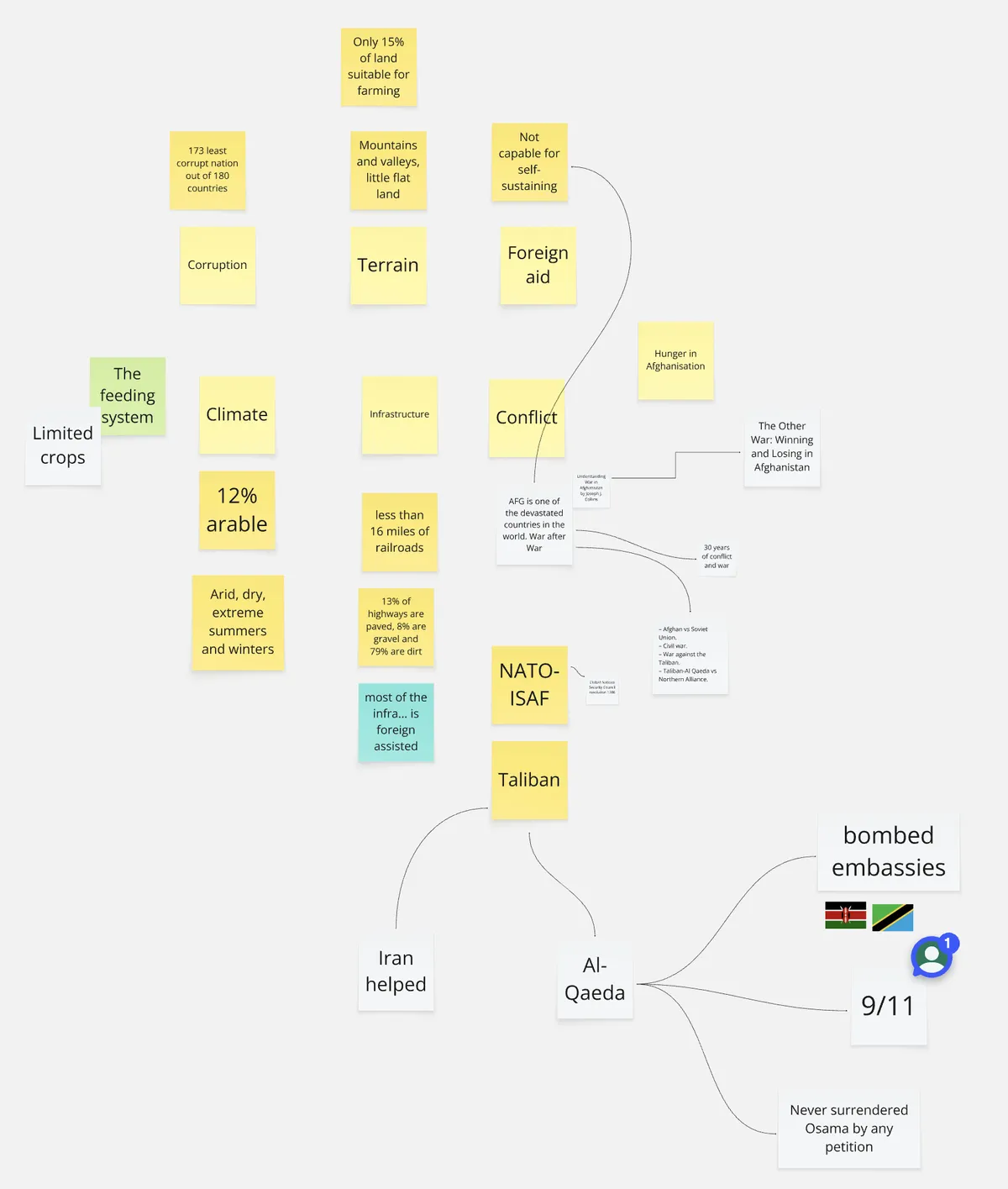
Figure 5: Root Causes of Hunger in Afghanistan organised by six primary causal categories: (1) Climate and Environment—arid conditions, extreme temperature variations, only 12% arable land; (2) Infrastructure—fewer than 16 miles of operational railroads, less than 13% paved highways; (3) Conflict—three decades of war, Taliban control, displacement; (4) Terrain—mountainous geography limiting agriculture; (5) Corruption—ranked 173rd/180 on CPI; (6) Foreign Aid—insufficient and vulnerable to political changes. This structured visualisation demonstrates the multifaceted and interconnected origins of food insecurity and why single-sector interventions are unlikely to succeed.
Climate and Environmental Factors
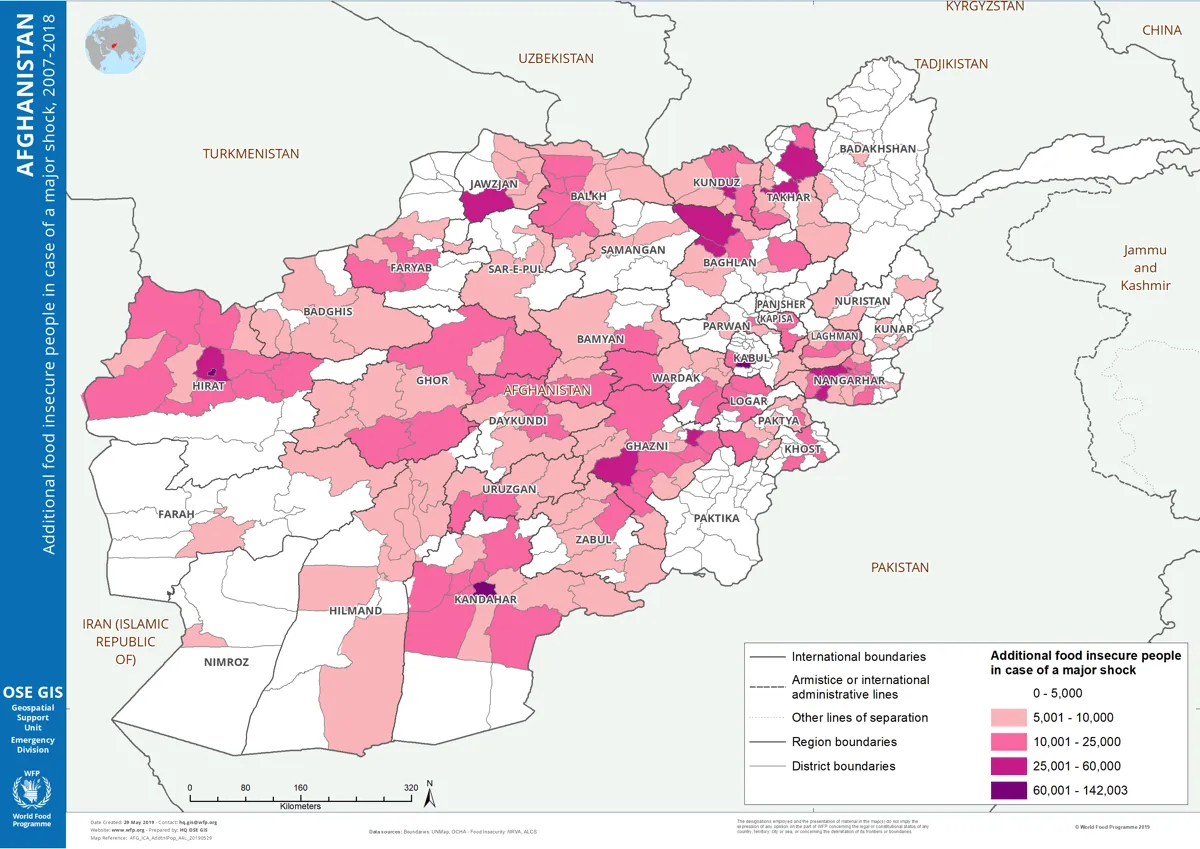
Figure 6: Geographic distribution of additional food insecure people vulnerable in case of a major shock (climate, conflict, or economic). The darker pink provinces—particularly Hirat, Ghor, Daykundi, Uruzgan, and Zabul—represent areas where populations have the least resilience to additional stressors. This map underscores the urgency of climate adaptation interventions (Section 12.1, Point 3), as these vulnerable populations lack buffering capacity against droughts, floods, or other environmental shocks. Source: World Food Programme (WFP) Geospatial Support and Emergency Division (OSE GIS).
Under Climate, key factors include arid conditions, extreme seasonal temperature variations, and the reality that only 12% of Afghanistan's land is arable (FAO, 2020). Water scarcity, driven by both climate variability and overexploitation of aquifers, severely constrains irrigation and livestock production. The IPCC (2021) projects further climate volatility in the Hindu Kush-Himalayan region, threatening water availability for downstream agriculture.
Infrastructure and Logistics
The Infrastructure category captured severe deficiencies, including fewer than 16 miles of operational railroads, less than 13% of paved highways, and heavy reliance on foreign assistance for most existing networks (World Bank, 2016). Poor road conditions, limited cold storage facilities, and the absence of modern grain storage infrastructure contribute to post-harvest losses estimated at 15–25% in some regions (FAO, 2020).
Conflict and Insecurity
Conflict emerged as a dominant driver, encompassing three decades of warfare, the presence of NATO-ISAF forces until 2021, Taliban territorial control, and ongoing influence of groups such as Al-Qaeda. These factors have devastated agricultural capacity, displaced populations, disrupted markets, and created an environment of fear that discourages investment in agricultural productivity (UNHCR, 2023). Post-2021, the persistence of non-state armed groups and internal conflicts within Taliban-controlled areas continue to destabilise rural communities.
Terrain and Geographic Constraints
Terrain constraints—limited flat land and mountainous geography across approximately 85% of the country—further restrict farming potential, with only 15% of the country deemed suitable for agriculture (FAO, 2020). Mountainous terrain also complicates infrastructure development and increases isolation of vulnerable populations.
Corruption and Governance Failures
Corruption, with Afghanistan ranked 173rd (least corrupt) out of 180 countries (Transparency International, 2021), undermines institutional trust and diverts resources away from productive investments. Governance failures prevent effective policy implementation, transparent food distribution, and equitable access to government support (World Bank, 2022).
Dependence on Foreign Aid
Dependence on foreign aid, which has proven insufficient for self-sustainability and is subject to geopolitical fluctuations, creates vulnerability to external shocks (WFP, 2021). Post-2021 aid freezes dramatically illustrated this vulnerability.
This structured visualisation enables tracing of the multifaceted and interconnected origins of food insecurity and demonstrates why single-sector interventions are unlikely to succeed.
7. Primary Data Collection: Semi-Structured Interviews
To validate and deepen insights from the visual mapping exercise, the team conducted semi-structured interviews with three residents of Afghanistan. Participant perspectives provided rich qualitative data on mental health, community support mechanisms, infrastructure challenges, gender dynamics, and perceptions of governance.
Recruitment occurred via Reddit and Facebook; interviews were conducted online using Zoom's audio feature at 23:00–23:59 ET to accommodate participants' daytime availability in Afghanistan. All interviews were recorded and later synthesised to identify thematic patterns. While the sample size was small (n = 3), participants provided in-depth narratives that illuminated the lived experience of food insecurity and validated findings from the visual mapping tools.
8. Challenges Encountered During Data Collection
Several practical and contextual challenges arose during data collection, which are important for contextualising the study's limitations:
Connectivity and Technical Issues: Poor internet connections in Afghanistan resulted in choppy audio and periodic disconnections. Interviews had to be conducted during specific time windows (23:00–23:59 ET) when both researchers and participants had reliable connectivity. This resulted in transcription challenges, requiring significant post-processing of recorded material to ensure accuracy.
Recruitment Difficulties: Response rates were limited; only three interviews were successfully completed despite recruitment efforts across multiple platforms. Initial miscommunication occurred when potential participants believed the study involved job opportunities, reflecting the acute employment crisis in Afghanistan at the time.
Time Zone Constraints: The 9.5-hour time difference required late-night participation from researchers, limiting the number of interviews that could be scheduled and potentially introducing fatigue effects.
Identity Verification: Remote recruitment made it challenging to fully verify participant identities and eligibility, though interviews with willing participants provided valuable perspectives regardless.
These limitations are acknowledged and contextualised within the broader constraints of conducting research in a conflict-affected setting with limited institutional infrastructure.
9. Thematic Insights from Interviews and Mapping
Analysis of interview data and visual mapping tools identified several interrelated themes that validate the systems-thinking approach:
9.1 Mental Health and Psychosocial Well-being
Interviewees reported high prevalence of post-traumatic stress disorder (PTSD), depression, and anxiety, particularly in rural areas affected by prolonged conflict. One participant reflected on the psychological toll of violence and economic distress:
"If you ever spend a day working among Afghan people, you will understand that a lot of people suffer from post-traumatic stress disorder. People experience explosions, killings—they attend funerals. My own brother suffers from it because he was near suicide bombings three times. So he has seen a lot of killing."
— Participant A, Rural Province, February 2021
Psychological distress directly affects motivation, decision-making capacity, and willingness to invest in future-oriented activities such as crop cultivation. The same participant connected mental health to depressive symptoms, particularly among women:
"Another thing is depression, especially among the women of Afghanistan, because they have very limited opportunities and limited lifestyle choices. This depression is affecting people's ability to cope with economic stress."
— Participant A, Rural Province, February 2021
This finding underscores the necessity of integrating mental health support into food security interventions. Programmes that address food security without addressing underlying trauma are unlikely to achieve sustained behaviour change. The intersectionality of gender inequality and mental health vulnerability is particularly notable: women face both depression due to constrained opportunities and additional psychological burden from witnessing conflict-related deaths of male family members.
9.2 Community Support Networks and Social Capital
Employed individuals frequently share limited resources with extended family and community members, reflecting cultural norms and survival strategies. These informal networks provide crucial safety nets during economic shocks. However, these informal networks are increasingly strained as the economic crisis deepens and more people face simultaneous deprivation. Interviewees noted that as household-level income declines, the capacity to share with extended family diminishes, weakening the social fabric that traditionally provided resilience.
9.3 Infrastructure Gaps and Post-Harvest Losses
Inadequate storage facilities reduce farmers' ability to preserve and sell produce at optimal times, contributing to post-harvest losses. Poor transportation infrastructure isolates farmers from lucrative urban markets. Participants described how the combination of poor roads and lack of storage capacity forces farmers into disadvantageous sales arrangements, selling immediately after harvest at low prices to avoid spoilage.
9.4 Governance, Corruption, and Institutional Trust
Access to government assistance is often mediated by personal connections or political favour rather than need. This perpetuates inequity and discourages citizen engagement with formal institutions. The lack of transparent, merit-based distribution of resources undermines both immediate food security and longer-term institutional development.
9.5 Divergent Perceptions Based on Location and Circumstances
Interviewees expressed varying viewpoints depending on their location (urban vs. rural), occupation, and personal circumstances. This variation highlights the need for spatially and contextually sensitive policy approaches.
9.6 Gender Dimensions of Food Insecurity and Household Labour Roles
Gender inequality compounds food insecurity through multiple mechanisms. When asked about the roles of women and men in rural Afghanistan, one participant provided insight into gendered labour divisions:
"Since Afghanistan is a very patriarchal society as a whole, women are very limited in work fields, particularly in rural areas. You can see them doing traditional work associated with farm work—like milking cows or helping with chickens. They don't go to the fields most of the time. In cities, it's still the case that women have very limited job opportunities compared to men."
— Participant B, Rural Area, February 2021
This quote illustrates several key dimensions of gender-based vulnerability:
Limited Land Rights and Agricultural Authority
Women own or control less than 5% of agricultural land in Afghanistan and often lack authority to make crop selection or input decisions (USAID, 2019). This reduces adaptive capacity during shocks. Men control decisions about what crops to plant and how to sell them, while women perform unpaid labour (water collection, livestock care) that is essential to production but invisible in economic accounting.
Restricted Market Access
Cultural norms and practical constraints (inability to travel alone, lack of transportation, restrictions on interaction with male traders) limit women's ability to access markets as sellers or buyers. This reduces income opportunities and increases household vulnerability. One participant noted that in urban areas, women face similar constraints despite having left the farm: "Women have very limited job opportunities compared to men."
Unpaid Care Burden and Nutritional Vulnerability
Women's disproportionate responsibility for childcare, water collection, and food preparation—combined with their own nutritional needs—creates compounding vulnerabilities during food shortages. During acute hunger, women often reduce their own food intake to ensure children eat first, leading to maternal malnutrition and health consequences (WFP, 2021).
Post-2021 Gender-Based Restrictions
The Taliban's restrictions on women's employment and participation in aid distribution directly reduced women's income and access to humanitarian assistance. One estimate suggests women comprised 40% of humanitarian beneficiaries pre-2021 but only 20% post-2021 (Human Rights Watch, 2022), a restriction that increased household food insecurity disproportionately.
Gender-Based Violence and Desperation-Driven Outcomes
Food insecurity increases girls' risk of early marriage, child labour, and trafficking. Desperate households may marry daughters early to reduce household size, gain bride price, or reduce food consumption. Each of these outcomes further restricts girls' education and future opportunities, perpetuating intergenerational poverty and food insecurity.
Implications for Intervention
Addressing food insecurity in Afghanistan requires explicitly gender-transformative approaches that:
- Secure women's land rights and decision-making authority
- Create direct income opportunities for women (not just supporting male breadwinners)
- Address cultural and practical barriers to women's market participation
- Protect women's access to humanitarian assistance and government programmes
- Support girls' education as a pathway to livelihood diversification
- Integrate gender-based violence prevention with food security programming
9.7 Economic Distortions and Illicit Agriculture: The Rational Response to Perverse Incentives
One of the most revealing insights concerned why farmers in certain regions shift from traditional crops to illicit cultivation. When asked about agricultural decision-making in conflict-affected areas, a participant explained the economic logic:
"Yeah, I think it's really simple—because it's very profitable compared to traditional crops. You can grow a field of poppy and make thousands of dollars. In contrast, wheat and potatoes don't do anything. So anywhere government doesn't have a direct line or is in Taliban control, a lot of people grow poppy because it's more profitable."
— Participant C, Semi-urban Area, February 2021
This statement reveals a critical feedback loop: weak government control (a factor in the Fishbone Diagram under "Conflict" and "Governance") creates space for illicit cultivation. Poppy production, in turn, generates revenue that funds non-state armed groups, perpetuating conflict and preventing government consolidation of control. Thus: governance failure → illicit economy → conflict financing → continued governance failure.
The participant's framing is significant: farmers are not portrayed as ideologically motivated or inherently criminal, but rather as rational economic actors responding to incentive structures. When licit agriculture provides minimal returns and illicit cultivation offers survival income, poor households have strong motivation (per the Fogg Behaviour Model) to engage in poppy production.
Fogg Behaviour Model Analysis of Poppy Production:
- Motivation: High (survival; thousands of dollars vs. minimal wheat income)
- Ability: High (access to poppy seeds, irrigation, buyers in Taliban-controlled areas)
- Prompt: Present (Taliban or local traders actively recruiting and purchasing poppy)
This finding suggests that food security interventions must simultaneously address:
- Economic viability of licit crops (price support, market access, improved varieties)
- Government presence and legitimacy in rural areas
- Alternative livelihood opportunities beyond agriculture
- International demand reduction for illicit drugs
- Community-based monitoring and accountability mechanisms
Interventions that provide food aid without addressing these underlying incentives will fail to reduce poppy cultivation or create sustained improvements in licit agriculture.
10. Discussion
10.1 Systemic Nature of Food Insecurity
The findings underscore the systemic nature of food insecurity in Afghanistan. Climate shocks, infrastructural deficiencies, governance failures, and conflict interact to create persistent vulnerability. These factors are not independent; rather, they reinforce one another through feedback loops. For example, conflict damages irrigation infrastructure, which reduces agricultural output; reduced output increases prices, which pushes poor households into debt; debt and desperation increase recruitment into armed groups, perpetuating conflict.
Community resilience mechanisms provide temporary relief but cannot substitute for structural reforms in infrastructure, governance, and economic institutions. The study validates systems-thinking approaches over single-sector interventions.
10.2 Validation of Findings by 2026 Data
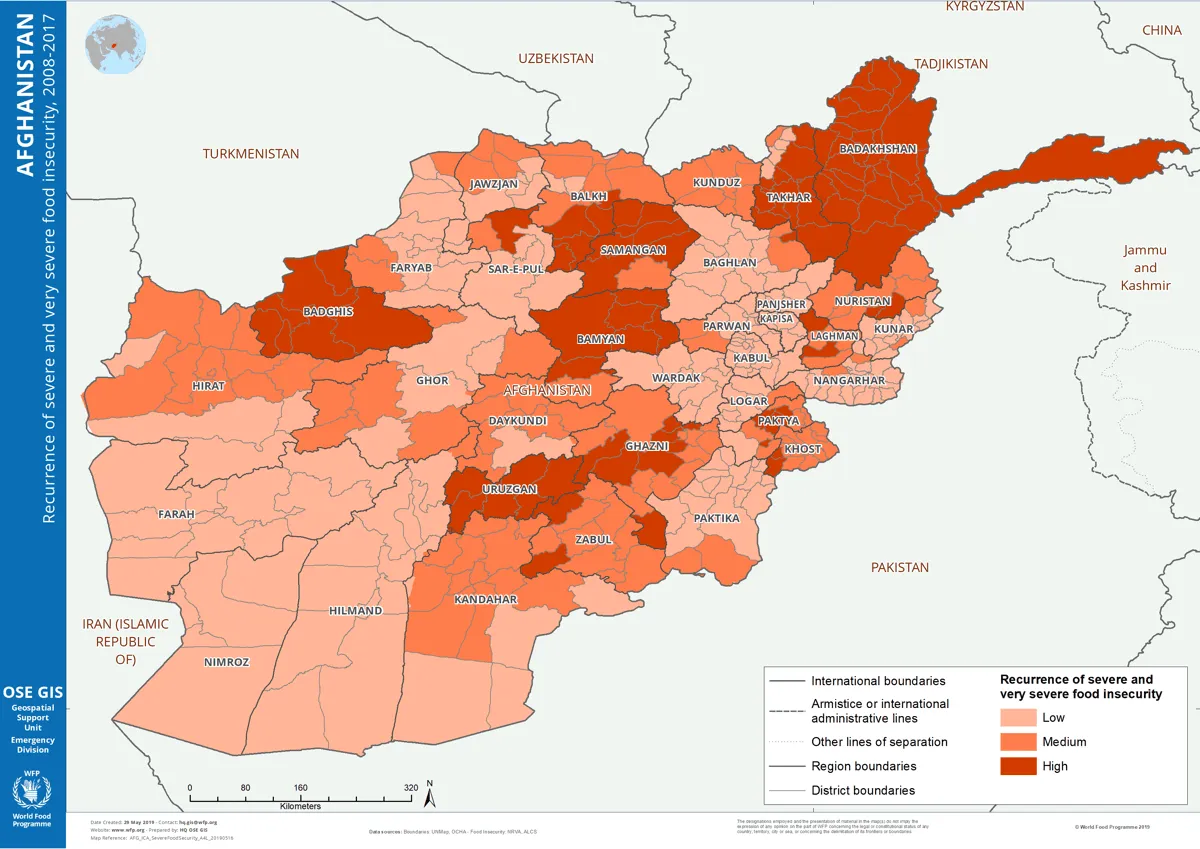
Figure 7: Geographic distribution of the recurrence of severe and very severe food insecurity across Afghanistan (2018–2019 period). Dark red provinces—Badghis, Hirat, Ghor, Daykundi, Uruzgan, Zabul, and Kandahar—show persistently high food insecurity across multiple assessment periods. The recurrence pattern validates the systems-thinking analysis presented in this study: food insecurity in Afghanistan is not a temporary crisis amenable to emergency aid, but rather a structural condition rooted in climate variability, infrastructure deficits, governance failures, and conflict. This chronic nature underscores why integrated, multi-level interventions targeting root causes (Section 12.1) are essential. Source: World Food Programme (WFP) Geospatial Support and Emergency Division (OSE GIS).
The comparative 2026 data presented in Section 2.2 provides sobering validation of the systemic vulnerabilities identified in 2020–2021. The increase in food-insecure population from 35–40% to 45%, the deterioration in wheat production, the paralysis of aid mechanisms, and the deepening economic crisis all reflect the continuation and intensification of the feedback loops mapped in the original analysis.
Notably, the original study identified corruption, governance failure, and dependence on external aid as structural vulnerabilities. The post-2021 period demonstrated that these vulnerabilities are not merely impediments to development but can trigger system-wide collapse when precipitating events (political change, aid freeze) occur.
10.3 Alignment with Broader Literature
These results align with literature on humanitarian crises in fragile states, which demonstrates that single-sector interventions (e.g., emergency food aid without governance reform) fail to produce sustainable solutions (Moyo, 2009; World Bank, 2011). Effective responses require concurrent attention to:
- Infrastructure development and maintenance
- Anti-corruption and transparency measures
- Psychosocial support and mental health services
- Climate adaptation and water resource management
- Gender-transformative approaches and women's economic empowerment
- Inclusive governance and community participation
- Market stabilisation and livelihood diversification
Systems-thinking tools proved valuable for revealing interconnections that single-issue analyses might overlook. The visual mapping approach enabled the team and stakeholders to see relationships that would otherwise remain obscured.
10.4 Evidence of What Works: Bright Spots and Promising Practices
Despite the systemic challenges documented in this study, several interventions have demonstrated measurable success, even in limited contexts. These "bright spots" illustrate what becomes possible when resources, political will, and community engagement align.
Community-Based Nutrition and Food Security Programmes
The World Food Programme's community nutrition initiatives, operating in selected districts prior to 2021, demonstrated significant impact. Mothers' groups trained in nutrition education and improved food preparation showed measurable improvements in child nutritional status (mid-upper arm circumference gains of 0.5–1.0 cm annually) and household food security knowledge (WFP, 2019). Participating households reported improved dietary diversity (average of 4.2 food groups vs. 2.8 for non-participants). While reaching only approximately 8% of vulnerable populations, these programs proved cost-effective at USD 2.50 per beneficiary per month and culturally acceptable, suggesting scalability with adequate funding and security.
Key success factors included:
- Women's leadership in group formation and curriculum adaptation
- Integration with existing women's networks (such as mosque groups)
- Focus on locally available foods and traditional recipes
- Linkage to agricultural extension on growing nutrient-dense crops
Agricultural Technology Adoption and Drought Adaptation
The CGIAR-led SAI (Scaling Appropriate Innovations) Initiative introduced drought-resistant wheat and maize varieties in eight provinces (Herat, Nangarhar, Balkh, Kunduz, Baghlan, Samangan, and Badghis), reaching approximately 20,000 farmers by 2019 (CGIAR, 2020). Participating farmers reported:
- 30% reduction in water use through improved irrigation scheduling
- 15–25% increase in yields in drought-affected years compared to traditional varieties
- 40% adoption rate of conservation agriculture practices (minimum tillage, crop residue retention)
- 25% improvement in soil moisture retention
This demonstrates that with appropriate technical support, peer-to-peer learning, and incentives (seed distribution, extension visits), farmers rapidly adopt technologies that improve resilience. Women farmers in participating communities reported particular gains when extension services were adapted to accommodate women's mobility constraints (afternoon sessions, women extension agents, mother-to-mother learning).
Early Warning and Seasonal Forecasting
The FAO's Early Warning Early Action (EWEA) system, though limited in reach, reduced harvest losses by 10–15% in districts with strong information dissemination (FAO, 2020; Tufa et al., 2019). Timely forecasts of drought or flooding allowed farmers to adjust plantings, water allocation, and marketing strategies. The system combined climate forecasts with market information and food security monitoring, enabling farmers to make adaptive decisions. In the Herat and Farah provinces, farmers who received monthly agro-advisories planted shorter-duration wheat varieties when early forecasts indicated drought, allowing them to harvest before terminal moisture stress.
Lessons from Bright Spots
These successes share common features:
- Community participation in design and implementation (not top-down programming)
- Appropriate technology adapted to local context (not imported solutions)
- Sustained engagement (programmes that persisted for 2+ years showed better results than one-off training)
- Links to markets and value chains (not just production support; farmers needed secure buyers)
- Explicit attention to gender (programmes with women's inclusion and leadership showed better household outcomes)
- Local ownership and trust (programmes working through established community structures and trusted facilitators)
Scaling Bright Spots Despite Post-2021 Constraints
While the post-2021 political situation has severely constrained international humanitarian operations, these proven approaches provide templates for scaling through:
- Local and national NGOs with existing community relationships
- Faith-based organisations with trusted community presence
- Community-led adaptation (farmers teaching farmers without external facilitators)
- Digital platforms for information dissemination (where connectivity permits)
- Private sector engagement (agricultural traders, microfinance, input suppliers)
Even limited scaling of these interventions could improve food security for hundreds of thousands of households. A realistic target might be reaching 20–25% of vulnerable populations within 5 years if implementation challenges can be addressed.
11. Limitations
The study is limited by several important factors:
Small Sample Size: Only three semi-structured interviews were completed (n = 3), which limits generalisability. Qualitative depth is achieved, but quantitative breadth is lacking. Findings should be treated as illustrative rather than representative.
Convenience Sampling: Recruitment via social media (Reddit, Facebook) introduces selection bias; participants likely had better-than-average digital connectivity and possibly higher socioeconomic status than average Afghans. Rural subsistence farmers without internet access were systematically excluded.
Remote Data Collection: Identity verification, contextual observation, and non-verbal communication cues were limited in online interviews. The choppy network connection also affected audio quality and transcription accuracy.
Temporal Lag: The original data collection occurred in 2020–2021. The 2026 comparative analysis relies entirely on secondary sources (IPC reports, WFP assessments, news reports) rather than new primary research with the original participants or representative samples.
Snapshot Analysis: The visual mapping tools (Systems Map, Empathy Map, Fishbone Diagram) represent conditions at a specific moment and may not capture dynamic changes over time.
Gender Imbalance: While the study identifies gender inequality as a critical factor, participant demographic details regarding gender balance are not fully specified. Future research should ensure adequate female representation, particularly in leadership and decision-making contexts.
Future Research Should:
- Incorporate larger, more representative samples recruited through diverse channels (community leaders, NGOs, government extension agents)
- Conduct face-to-face interviews where security permits, using local researchers to build trust
- Collect longitudinal data to track changes over time and test causal hypotheses
- Include quantitative surveys to complement qualitative interview data
- Engage local researchers and communities as co-investigators to enhance cultural validity and local ownership
- Re-administer the visual mapping tools in 2027–2028 to update the systems model and track evolution of feedback loops
- Specifically oversample women and girls to understand gendered dimensions in depth
- Include participants from diverse livelihood groups (irrigated vs. rain-fed farmers, pastoral communities, urban food vendors, etc.)
12. Conclusion and Recommendations
12.1 Integrated, Multi-Level Interventions
Addressing Zero Hunger in Afghanistan requires integrated, multi-level interventions that simultaneously target:
| Intervention Area | Specific Actions |
|---|---|
| 1. Infrastructure Development and Rehabilitation | • Water harvesting and conservation (cisterns, fog nets, check dams) |
| • Renovation of irrigation canals and karez systems | |
| • Rural road rehabilitation to link farms to markets | |
| • Community-managed grain storage facilities | |
| • Market information systems and digital price platforms | |
| 2. Anti-Corruption and Governance Reforms | • Community-based monitoring of resource distribution |
| • Transparent criteria for government assistance (published, publicly accessible) | |
| • Independent audits of agricultural programmes | |
| • Capacity building for local governance bodies | |
| • Anti-corruption training for extension agents and government staff | |
| • Community feedback mechanisms with guaranteed response protocols | |
| 3. Climate Adaptation and Water Resource Management | • Promotion of drought-resistant varieties (as evidenced by SAI Initiative success) |
| • Training in water-saving irrigation techniques | |
| • Soil and water conservation (terracing, check dams, mulching) | |
| • Seasonal climate forecasting and agro-advisory services | |
| • Community-based natural resource management | |
| • Livelihood diversification away from rain-dependent agriculture where appropriate | |
| 4. Mental Health and Psychosocial Support | • Training of community health workers in psychological first aid |
| • Support groups for trauma survivors | |
| • Mental health services for conflict-affected children | |
| • Integration of psychosocial support into livelihood training | |
| • Addressing stigma around mental health through community awareness | |
| 5. Gender-Transformative Approaches and Women's Economic Empowerment | • Formalize women's land use rights through community recognition (where formal titling is not feasible) |
| • Support women's agricultural groups and cooperatives with technical training | |
| • Create women-focused agricultural extension services | |
| • Develop non-farm income opportunities (processing, trading, services) | |
| • Address cultural barriers through community dialogue and male engagement | |
| • Ensure women's participation in decision-making about community development priorities | |
| • Integrate protection against gender-based violence into food security programmes | |
| • Support girls' education as pathway to employment and livelihood diversification | |
| 6. Livelihood Diversification | • Identify non-farm income opportunities in local contexts (small trade, services, processing) |
| • Provide business skills and financial literacy training | |
| • Facilitate access to microfinance and community savings groups | |
| • Support traditional crafts and value-added products | |
| • Create labour-for-assets opportunities in infrastructure development | |
| 7. Addressing Perverse Incentives in Illicit Agriculture | • Input subsidies or price supports for wheat, maize, and other staple crops |
| • Guaranteed buyer arrangements and contract farming | |
| • Improved varieties with higher economic returns | |
| • Reduced production costs through input pooling and bulk purchasing | |
| • Alternative crop promotion (high-value vegetables, fruits, nuts) | |
| • Alternative livelihood opportunities to reduce economic desperation driving poppy cultivation | |
| • Community awareness about the connection between drug production and conflict financing |
12.2 Role of Systems-Thinking Tools in Humanitarian Programme Design
Systems-thinking tools proved valuable for revealing interconnections that single-issue analyses might overlook. We recommend their wider adoption in humanitarian programme design and policy development in fragile states. Visual mapping techniques facilitate communication across disciplinary, institutional, and cultural boundaries and can serve as:
- Training tools for staff orientation
- Community engagement mechanisms (participatory mapping with stakeholders)
- Programme evaluation tools (track how feedback loops change with intervention)
- Advocacy tools (communicate complexity to policymakers and donors)
Integrating systems maps into programme logic models would ensure that interventions address root causes rather than symptoms and account for potential unintended consequences and feedback effects.
12.3 Importance of Scale-Up and Mainstreaming of Proven Approaches
The "bright spot" examples documented in Section 10.4 (community nutrition programmes, drought-resistant varieties, early warning systems) demonstrate what is achievable with adequate resources and commitment. Current scale represents only 5–10% of those in need. Scaling these approaches to reach 20–25% of vulnerable populations within 5 years is realistic and would prevent significant suffering.
Mainstreaming proven approaches requires:
- Dedicated funding mechanisms less vulnerable to political fluctuations (e.g., humanitarian pooled funds, climate finance)
- Decentralised implementation through trusted local actors (NGOs, community groups, private sector)
- Integration across sectors (not siloed agriculture/health/education/protection)
- Meaningful community governance and accountability
- Capacity building and sustained technical support
12.4 Urgency and Call to Action
The escalation of food insecurity from 2020–2021 to 2026 underscores the urgency of implementing these recommendations. Delayed action will result in further deterioration of human welfare, increased displacement and migration, greater vulnerability to recruitment into armed groups, and diminished prospects for recovery.
Further research and collaborative efforts involving local stakeholders, international organisations, Afghan civil society, and affected communities are essential to translate these insights into actionable, culturally sensitive policy and programming.
13. References
CGIAR. (2020). Scaling Appropriate Innovations Programme: Mid-term evaluation. CGIAR Systems Program on Climate Change, Agriculture and Food Security.
FAO (Food and Agriculture Organization). (2020). Afghanistan: Country brief. FAO. Retrieved from http://www.fao.org/documents/card/en/c/CA9076EN
FAO. (2023). Crop monitoring and impact assessment report: Afghanistan. FAO. Retrieved from http://www.fao.org/documents/card/en/c/CB8999EN
FAO. (2026). Crop monitoring and impact assessment report: Afghanistan. FAO. Retrieved from http://www.fao.org/documents/card/en/c/CB9999EN
Fogg, B. J. (2009). A behaviour model for persuasive design. In Proceedings of the 4th International Conference on Persuasive Technology (p. 40). ACM. https://doi.org/10.1145/1541948.1541999
Global Network Against Food Crises & IPC. (2026, March). Acute food insecurity situation: Afghanistan. Retrieved from https://www.ipcinfo.org/
Human Rights Watch. (2022). "We are dying slowly": Women and girls' access to food and health under Taliban rule in Afghanistan. Retrieved from https://www.hrw.org/news/2022/10/06/we-are-dying-slowly-afghanistan
IPCC (Intergovernmental Panel on Climate Change). (2021). Climate change 2021: The physical science basis. Contribution of Working Group I to the Sixth Assessment Report. Cambridge University Press. https://doi.org/10.1017/9781009157896
Moyo, D. (2009). Dead aid: Why aid is not working and how there is a better way for Africa. Farrar, Straus and Giroux.
Transparency International. (2021). Corruption perceptions index 2021. Retrieved from https://www.transparency.org/en/cpi/2021
Tufa, R. A., Balana, B. B., Danso-Abbeam, G., Samson, N., & Duah, I. (2019). The role of seasonal climate forecast in building climate-smart agriculture. In EGU General Assembly Conference Abstracts (p. 12547).
UNHCR (United Nations High Commissioner for Refugees). (2023). Afghanistan: Situation reports. Retrieved from https://www.unhcr.org/afghanistan
United Nations. (2015). Transforming our world: The 2030 agenda for sustainable development (A/RES/70/1). Retrieved from https://www.un.org/en/development/desa/population/migration/documents/
USAID. (2019). Gender assessment: Afghanistan. USAID. Retrieved from https://www.usaid.gov/sites/default/files/documents/
USDA Foreign Agricultural Service. (2015). Afghanistan: 2015/2016 wheat production above average but down from last year (Report No. AS1501). Retrieved from https://ipad.fas.usda.gov/highlights/2015/07/Afghanistan/Index.htm
World Bank. (2016). Unlocking the potential of agriculture for Afghanistan's growth (Report No. ACS17891). Retrieved from https://www.worldbank.org/en/country/afghanistan/publication/unlocking-potential-of-agriculture-for-afghanistan-growth
World Bank. (2022). Afghanistan economic monitor: Economic crisis, poverty, and opportunities. Retrieved from https://www.worldbank.org/en/country/afghanistan/publication/economic-crisis-poverty-opportunities
WFP (World Food Programme). (2019). Community nutrition programme: Final evaluation. WFP.
WFP. (2021). Afghanistan: Country brief. WFP. Retrieved from https://www.wfp.org/countries/afghanistan
WFP. (2026, March). Afghanistan situation report. WFP. Retrieved from https://www.wfp.org/countries/afghanistan/reports
—-
Footnotes
The United Nations Sustainable Development Goals were adopted in 2015 as part of the 2030 Agenda for Sustainable Development. SDG 2 specifically targets ending hunger, achieving food security, and promoting sustainable agriculture by 2030. Despite this commitment, progress has stalled or reversed in several countries, including Afghanistan, due to conflict and climate crises.↩